
CLNICAL TRIALS WARSZAW
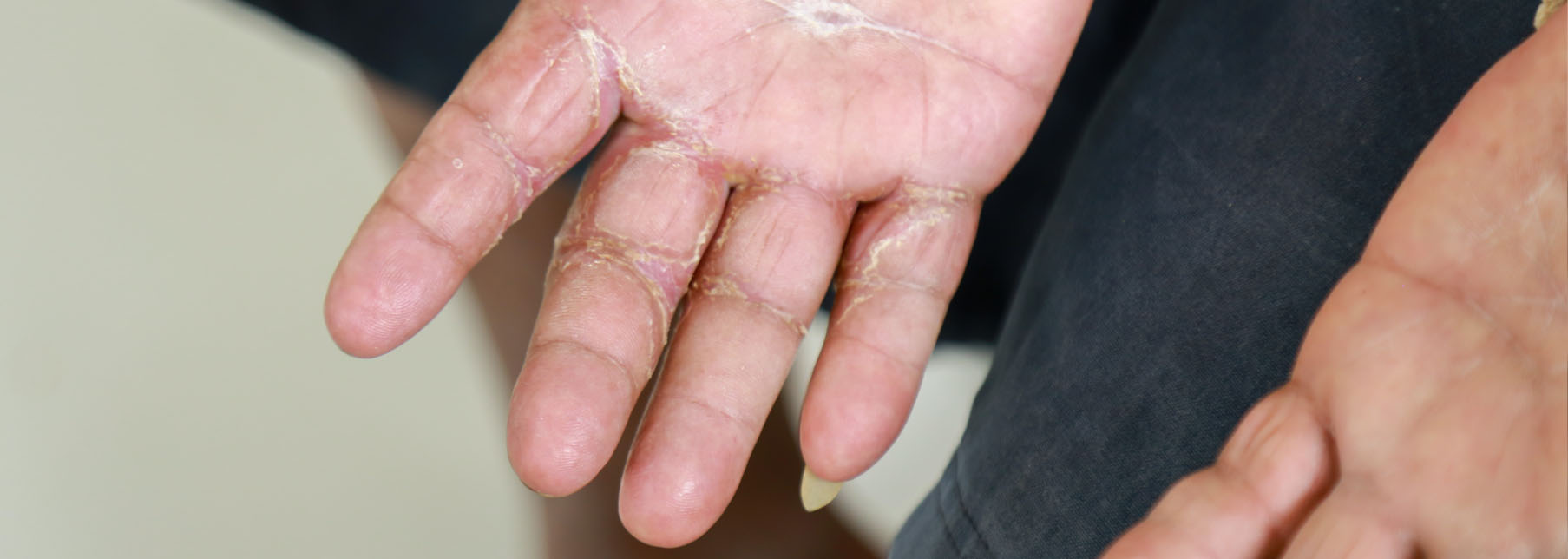
A chronic, rare autoimmune disease that can lead to life-threatening complications. Systemic sclerosis is also called scleroderma (Greek for “hard skin”). It is a connective tissue disease characterized by progressive fibrosis of the skin and internal organs, eventually damaging them and preventing proper function. It occurs relatively rarely (max. 3 cases per 100,000 people), more often in women between 30 and 50.
The disease has several forms:
Early Symptoms
Early symptoms are observed in the skin, but over time the process involves all vital organs.
Treatment of Systemic Sclerosis
Any internal organ ailment following skin changes is an indication for a specialist consultation. The goal of a rheumatological consultation is to determine if the skin changes are characteristic of scleroderma, refer the patient for capillaroscopy and blood tests, and rule out other underlying causes (e.g., cancer).